
WELCOME BONUS 300%
UP TO €2000 + 100
FREE SPINS
UP TO €2000 + 100
FREE SPINS
Home → Blackjack
Blackjack at Orbit Spins: Variants, Rules and Payouts
Ignoring the Basic Strategy Chart: 1 Percent Wasted
Blackjack 6 decks, S17, DAS, DOA, 3:2 payout reaches an RTP of 99.54% with a house edge of 0.46%, and that figure assumes basic strategy on every hand. The house edge is the average share of each stake the casino keeps, so 100 € of stakes costs 0.46 € on average when the chart is followed correctly. A player who ignores the chart hands back roughly one percent of everything staked, and the gap widens with every session.
Placing that against Blackjack Liberal Vegas Strip, which pairs S17 with doubling after a split, resplitting and late surrender for an RTP of 99.72% and a house edge of 0.28%, shows what disciplined rule selection already buys. Basic strategy is required to reach the 99.54% figure, and the Liberal Vegas Strip set shows a standard deviation of 1.15 across its rounds. The chart is therefore not decoration; it is the condition on which the published return is calculated.
The practical cost of skipping it is visible on a blackjack payout. A 3:2 blackjack returns 150 € on a 100 € stake, while a 6:5 payout returns only 120 €, and sloppy play adds errors on top of that difference. Over 100 € of stakes, the average cost moves from 0.46 € toward the one-percent mark, which is money the player never sees again.
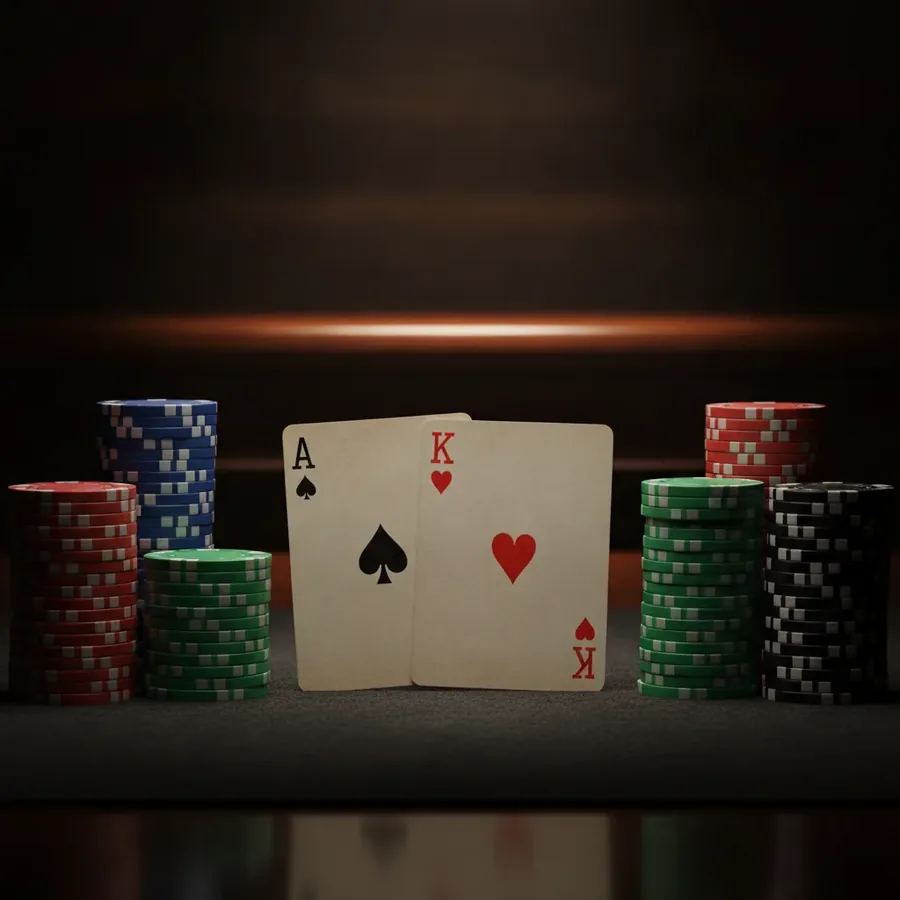
The 3:2 Blackjack Payout Explained
A 3:2 blackjack payout pays 150 € on a 100 € stake, and a regular winning hand pays 1:1, so the natural only carries the premium. The same table can instead pay 6:5, which returns 120 € on that 100 € stake, a shortfall of 30 € on a single natural. That one change moves the game's RTP from 99.54% to 98.15%.
The house edge explains the size of the shift: replacing 3:2 with 6:5 adds exactly 1.39 percentage points to the casino's edge, taking it from 0.46% to 1.85%. No other single rule change in the standard set is worth that much, and the payout cut applies to every natural the player draws. A player who sees the table pays 6:5 is looking at a game whose return has already dropped by more than a full point.
Insurance is the other payout that sits beside the main bet. It pays 2:1 but carries an RTP of 92.53% against a house edge of 7.47% over six to eight decks, so basic strategy always declines it except for card counters at a true count of at least +3. The side bet is capped at 50% of the main bet. On a single deck the insurance edge is about 5.88%.
One Deck vs Eight Decks: The House Edge Gap
Blackjack Single deck, classic rules, 3:2 reaches an RTP of 99.85% with a house edge of 0.15%, the lowest figure among the standard variants. Going from eight decks to one is worth about 0.48 percentage points of edge, which is why the single-deck table looks so much cheaper per 100 € staked. That is 0.15 € kept by the casino against 0.46 € on a six-deck game.
The six-deck comparison makes the same point from the other side. Blackjack 6 decks, S17, DAS, DOA, 3:2 sits at an RTP of 99.54% and a house edge of 0.46%, and moving from 6 decks to 8 decks costs only about 0.02 percentage points. Deck count is therefore a smaller lever than most players assume once the shoe is already large.
The catch is the payout attached to the single deck. A 6:5 payout instead of 3:2 adds 1.39 percentage points to the house edge, which is far more than the 0.48 percentage points the single deck removes, so a one-deck table paying 6:5 ends up worse than a six-deck table paying 3:2. A 100 € natural returns 120 € there instead of 150 €.
16 vs 10 played incorrectly: most common error
A hard 16 against a dealer 10 is the hand where basic strategy and instinct part company most often, and the 6-deck S17 game with DAS, DOA and a 3:2 payout carries an RTP of 99.54% only when the chart is followed on exactly these hands. The house edge of 0.46% is an average over correct play, so each deviation eats into that margin. That is 0.46 € per 100 € staked at best.
Doubling down on any first two cards is permitted in that rule set, and doubling after a split adds about 0.14 percentage points of return, while resplitting aces adds 0.08 percentage points. Those gains only arrive if the player also stands, hits or doubles on the right hands. The 16-against-10 decision is the one that appears most frequently across a session.
The cost of getting it wrong is easiest to see in payouts. On a 100 € stake a 3:2 natural returns 150 € and a regular win returns 1:1, so the value of a single correct decision is small but repeated. Late surrender, worth about 0.08 percentage points, gives the player a way out of some poor hands by returning 50% of the stake after the dealer checks for blackjack.
Soft 17 Hit vs Stand: 0.22 Percent
Dealer hitting soft 17 lowers RTP by 0.22 percentage points, which is the single largest rule modifier in the standard blackjack set. A game with S17 runs at an RTP of 99.54% and a house edge of 0.46% on six decks, while the H17 version adds 0.22 percentage points of edge on top of that. The difference is 0.22 € per 100 € staked over the long run.
The other modifiers are smaller but stack in the same direction. Doubling after a split improves the return by about 0.14 percentage points, resplitting aces by 0.08 percentage points, and six decks instead of eight by about 0.02 percentage points. Late surrender is worth another 0.08 percentage points and returns 50% of the stake. Read together, the soft 17 rule outweighs any one of them.
Splitting allows up to 4 hands, with split aces usually receiving one card each, and doubling doubles the stake for one card. On a 100 € stake a 3:2 natural pays 150 € and a 6:5 natural pays only 120 €, so rule reading has to cover both the dealer's soft 17 handling and the payout before a seat is taken.
Blackjack variants at a glance
| Variant | Payout | House edge | Rule | RTP |
|---|---|---|---|---|
| Blackjack 6:5 payout instead of 3:2 (6 decks) | Blackjack 6:5, win 1:1 | 1.85% | Replacing 3:2 with 6:5 adds exactly +1.39 percentage points to the casino's edge – more than any other rule change. On a €10 bet a blackjack pays €12 instead of €15. | 98.15% |
| Blackjack Surrender (late surrender) – rule effect | 50% of the stake returned | −0.08 percentage points | The player gives up the hand after the dealer has checked for blackjack and loses half the stake. Improves RTP by about 0.08 percentage points. Early surrender is worth much more (up to −0.6 percentage points) but is extremely rare. | n/a (rule modifier) |
| Blackjack Insurance (6–8 decks) | Insurance 2:1 | 7.47% | Separate side bet of up to 50% of the main bet when the dealer shows an ace. Basic strategy ALWAYS declines it (except for card counters at a true count ≥ +3). With a single deck the edge is ≈ 5.88% | 92.53% |
| Blackjack Split / double / H17 – rule effects | Double – stake ×2 with one card; split – up to 4 hands; split aces usually get one card each. | H17 +0.22 percentage points; RSA −0.08 percentage points; DAS −0.14 percentage points | Dealer hitting soft 17 lowers RTP by 0.22 percentage points; resplitting aces improves it by 0.08 percentage points; doubling after a split improves it by about 0.14 percentage points; 6 decks instead of 8 – about 0.02 percentage points. | n/a (rule modifiers) |
| Blackjack 6 decks, S17, DAS, DOA, 3:2 payout, basic strategy | Blackjack 3:2, regular win 1:1, insurance 2:1 | 0.46% | Dealer stands on soft 17; double down on any first two cards; doubling after a split allowed; no surrender. Basic strategy is required to reach this figure | 99.54% |
| Blackjack Single deck, classic rules, 3:2 | Blackjack 3:2, win 1:1 | 0.15% | Fewer decks = lower edge; one deck gives about −0.48 percentage points compared with 8 decks. Often offset by a 6:5 payout. | 99.85% |
Splitting at a Live Table, Step by Step
Splitting a pair at a live blackjack table starts with the rule that allows up to four hands from one original hand, with the split aces generally receiving one card each. The 6-deck rule set that combines S17, DAS, DOA and a 3:2 payout carries an RTP of 99.54% and a house edge of 0.46%, and basic strategy is required to reach that figure. A player who splits without the strategy behind it can give back more than the 0.46% the rules allow.
Doubling after a split, known as DAS, improves the return by about 0.14 percentage points, while resplitting aces adds 0.08 percentage points. The same 6-deck game with a 6:5 payout instead of 3:2 pushes the house edge to 1.85%, because a €10 blackjack then pays €12 instead of €15. Splitting into two hands at that payout means the extra hand is played under a worse blackjack price than the first.
Liber Vegas Strip rules, the most player-friendly set with S17, DAS, resplit and late surrender, reach 99.72% RTP and a 0.28% house edge, with a standard deviation of 1.15. Late surrender alone is worth about 0.08 percentage points because the player loses only half the stake after the dealer checks for blackjack. At a live table the split decision is therefore tied to the payout on the table, not to the pair alone.
Continuous Shuffling Machines Reshuffle After Every Round
A continuous shuffling machine returns discards to the shoe after every round, so the deck composition never drifts far from its starting state. That matters because deck count drives the edge: one deck gives about 0.48 percentage points less house edge than eight decks, and six decks sit only about 0.02 percentage points above eight.
Card counting depends on a rising proportion of tens and aces, and a machine that reshuffles after each round removes that drift entirely. Insurance, a separate side bet of up to 50% of the main wager when the dealer shows an ace, returns 92.53% across six to eight decks, and basic strategy always declines it except for counters at a true count of +3 or higher.
On the six-deck, S17, DAS, DOA, 3:2 game the house edge is 0.46% with basic strategy, and the machine does not change that figure. It changes who can beat it: without a stable shoe, the counter's edge disappears, and the 7.47% house edge on insurance stays out of reach for anyone relying on the count.
Early Surrender Is Gone From Many Tables
Late surrender lets the player fold after the dealer has checked for blackjack and take back half the stake, improving the return by about 0.08 percentage points. Early surrender, which allows the fold before that check, is worth up to 0.6 percentage points, roughly seven times as much, but it appears at very few tables.
The Liberal Vegas Strip rule set combines S17, DAS, resplitting and late surrender for a 99.72% RTP and a 0.28% house edge. The six-deck, S17, DAS, DOA, 3:2 game with no surrender returns 99.54% against a 0.46% edge, so the surrender option alone accounts for a meaningful slice of the gap between the two.
Where surrender is absent, the player's only exit from a bad hand is to stand or hit, and the wager stays fully exposed. On a 100 EUR stake, the difference between a 0.28% edge and a 0.46% edge is 0.28 EUR versus 0.46 EUR of expected cost per hand, which compounds across a long session at the tables.
Split, Double Down and Surrender by the Numbers
Three rule modifiers carry most of the movement in blackjack returns: doubling after a split at about 0.14 percentage points, resplitting aces at 0.08 percentage points, and late surrender at 0.08 percentage points. The dealer hitting soft 17 runs the other way, adding 0.22 percentage points to the house edge, so H17 costs more than DAS and late surrender together recover.
Deck count is the smaller lever: six decks instead of eight is worth about 0.02 percentage points, while a single deck at classic rules with a 3:2 payout reaches 99.85% RTP and a 0.15% edge. That single-deck figure is often erased by a 6:5 payout, which adds exactly 1.39 percentage points to the casino's edge, more than any other rule change.
The payout itself decides the size of a blackjack: on a 10 EUR wager, 3:2 pays 15 EUR and 6:5 pays 12 EUR, a 3 EUR difference on every natural. Insurance pays 2:1 but returns only 92.53% across six to eight decks, a 7.47% house edge that basic strategy always declines.
Double Down or Just Hit on 11
Doubling down on any first two cards is part of the six-deck, S17, DAS, DOA, 3:2 rule set, which returns 99.54% with a 0.46% house edge under basic strategy. On a total of 11, the double commits a second unit and draws exactly one card, turning a 10 EUR wager into 20 EUR at risk on a single decision.
The rule effect of doubling after a split is about 0.14 percentage points of return, and that figure assumes the player doubles at the correct times rather than on every eleven. Taking one card instead of two removes the option to hit again, so the double only pays off when the expected gain from the extra unit exceeds the lost flexibility.
Against a dealer's weak upcard, the extra unit on 11 is the standard play in basic strategy; against a strong upcard, a simple hit keeps the wager at one unit. Quantum Blackjack Plus Live from Playtech accepts bets from 1 EUR to 5,000 EUR and pays multipliers up to 1,000x on three-card combinations totalling 21 points, where the decision on 11 carries far more than the base stake.
Which Rule Variants the Software Shows
The standard six-deck game carries an RTP of 99.54% and a house edge of 0.46% when the dealer stands on soft 17, doubling after a split is allowed, and a natural pays 3:2. That edge means 100 € of basic-strategy play costs 0.46 € on average, while a rule change to dealer hits soft 17 adds 0.22 percentage points and worsens the return to 99.32%.
The most player-friendly set is the Liberal Vegas Strip variant, with an RTP of 99.72% and a house edge of 0.28%. It combines standing on soft 17, doubling after a split, resplitting aces, and late surrender; resplitting aces alone improves the return by 0.08 percentage points. A player using basic strategy keeps 28 cents of every 100 € staked at this table.
The single-deck classic game is the strongest listed rule set, at an RTP of 99.85% and a house edge of 0.15%. Fewer decks reduce the edge by about 0.48 percentage points compared with eight decks, but many tables offset that gain by paying 6:5 on a natural instead of 3:2. That payout change adds exactly 1.39 percentage points to the casino edge.
Soft vs Hard Hands in Practice
A soft hand contains an ace counted as 11, so the value can change without busting; a hard hand has no flexible ace. The rule effects show why the distinction matters: dealer hits soft 17 raises the house edge by 0.22 percentage points when the casino forces a draw on that flexible total.
Doubling after a split is worth about 0.14 percentage points to the player, and many soft totals are the hands where this option has practical value. A split ace usually receives only one card per hand, which keeps the soft-ace flexibility limited compared with a starting hand of ace plus a low card.
The 3:2 payout game gives a 100 € bet a 150 € win on a natural, while 6:5 pays only 120 €. Basic strategy treats soft hands differently from hard ones because the ace can absorb a high card; reaching the 99.54% RTP on the six-deck game requires that distinction on every decision.
The Shoe, the Cut Card and 75% Penetration
The six-deck game listed with an RTP of 99.54% uses a shoe format, and the cut card placement determines how many cards are dealt before a reshuffle. Penetration of 75% means three of every four decks are played; card counters watch this because deeper penetration gives more reliable counts.
Single-deck classic rules carry an RTP of 99.85% and a house edge of 0.15%, the lowest edge in the list. The difference between one deck and eight decks is about 0.48 percentage points, which shows that fewer decks in the shoe improve the player return when the cut card is not placed shallowly.
Insurance is a side bet of up to 50% of the main bet when the dealer shows an ace, and at a single deck the insurance edge is about 5.88%. Basic strategy always declines insurance except for a card counter at a true count of at least +3, because the 2:1 payout does not compensate the true probability.
The Insurance Mistake: 7% Extra House Edge
Taking insurance is the most expensive listed error: the side bet carries an RTP of 92.53% and a house edge of 7.47% with six to eight decks. Basic strategy always declines the insurance offer when the dealer shows an ace, and the only listed exception is a card counter at a true count of at least +3.
The insurance edge at a single deck is approximately 5.88%, which is lower than the 7.47% multi-deck figure but still dramatically worse than the single-deck main game at a 0.15% house edge. A player who takes insurance on every ace is adding a separate bet where the casino keeps 7.47 € per 100 € staked.
The 3:2 payout on the main bet pays 150 € on a 100 € stake, while insurance pays 2:1 on the side bet amount. Declining insurance and playing the standard six-deck game with basic strategy returns an RTP of 99.54%, so the difference between that and the insurance RTP is 7.01 percentage points of long-run return.
Contact
Live - online chat
Banking









Providers












Orbit Spins 2026